
Safe Pet Transport. Why It Matters, Told Plainly.
This is the page our whole mission rests on. Here's what most of us were never told, written kindly and without judgement.


The Core Idea
In a collision, an unrestrained pet becomes a projectile. That's the physics, not a scare story.
A 20kg dog in a 30mph crash is thrown with the force of around 500kg. A larger dog of around 36kg can exert roughly 2,400 pounds of force. No lap, no boot and no human arm can hold that.
The Awareness Gap
Most people have simply never been told. Over 60% of drivers don't believe it's dangerous to drive with an unrestrained pet, according to recent UK driver surveys.
A 2024 study found that well over half of British drivers had travelled with unsecured dogs, and nearly one in 10 had driven with a dog on their lap.
There's a "short journey" misconception too, the idea that a quick local trip must be safe. In reality, most accidents happen close to home, on familiar roads, where drivers are on autopilot.
What the Law Actually Says
Highway Code Rule 57 requires drivers to suitably restrain animals so they can't distract or injure you, or themselves, in a sudden stop.
The law exists. Enforcement doesn't. There's no legal definition of 'suitable restraint' and no direct penalty for rule-breaking. An unrestrained pet can attract charges like driving without due care and attention (fines up to £5,000, penalty points, or driving bans), but the law is dangerously vague. Unrestrained pets involved in accidents can also invalidate insurance. This gap is exactly why we're pushing for legislative change.
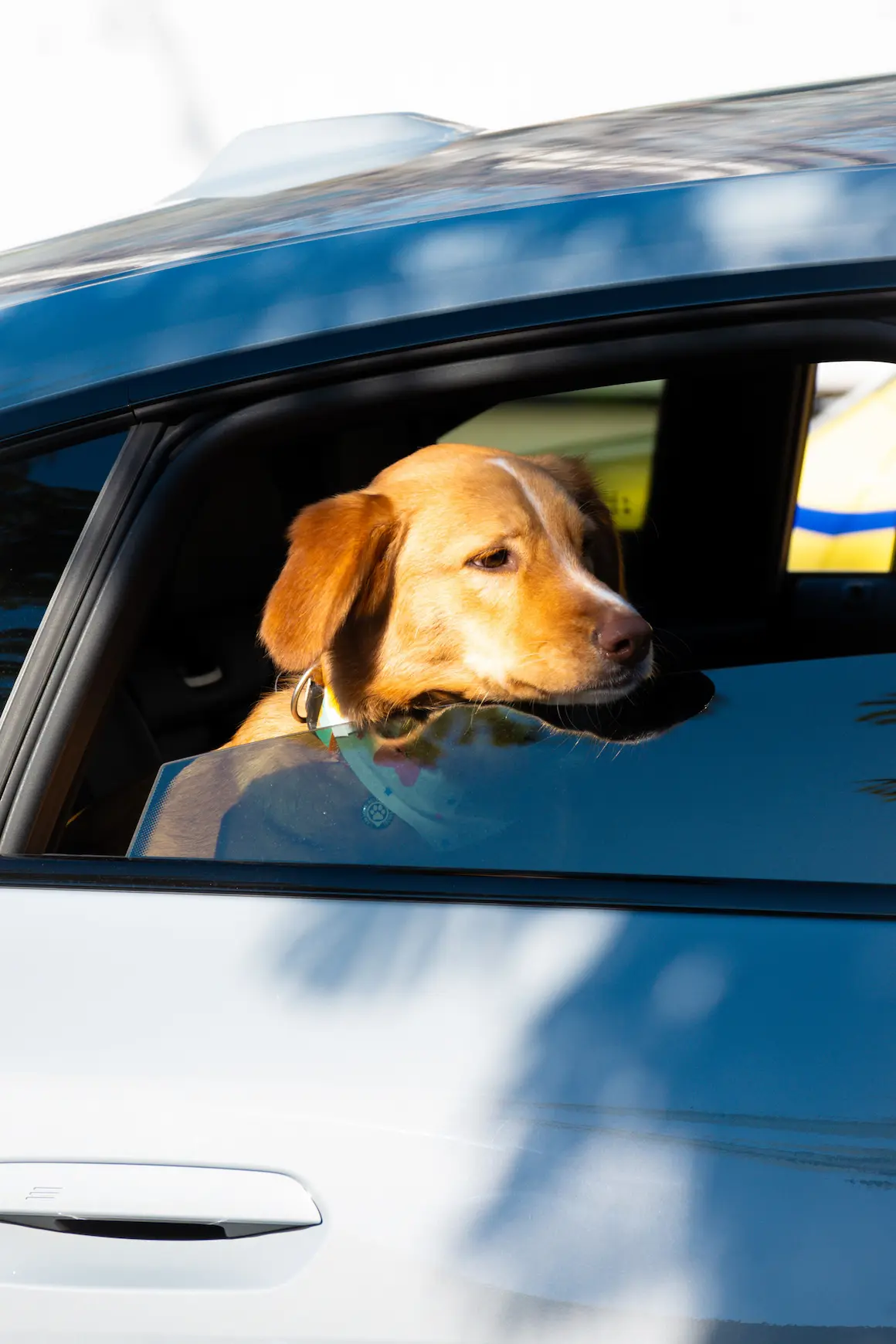
An unrestrained dog hanging from a window is at risk of jumping from a moving vehicle, inhaling debris that damages eyes and ears, and being struck by road hazards. One moment of distraction can be fatal.
We share this as information you deserve to have, not as a threat.
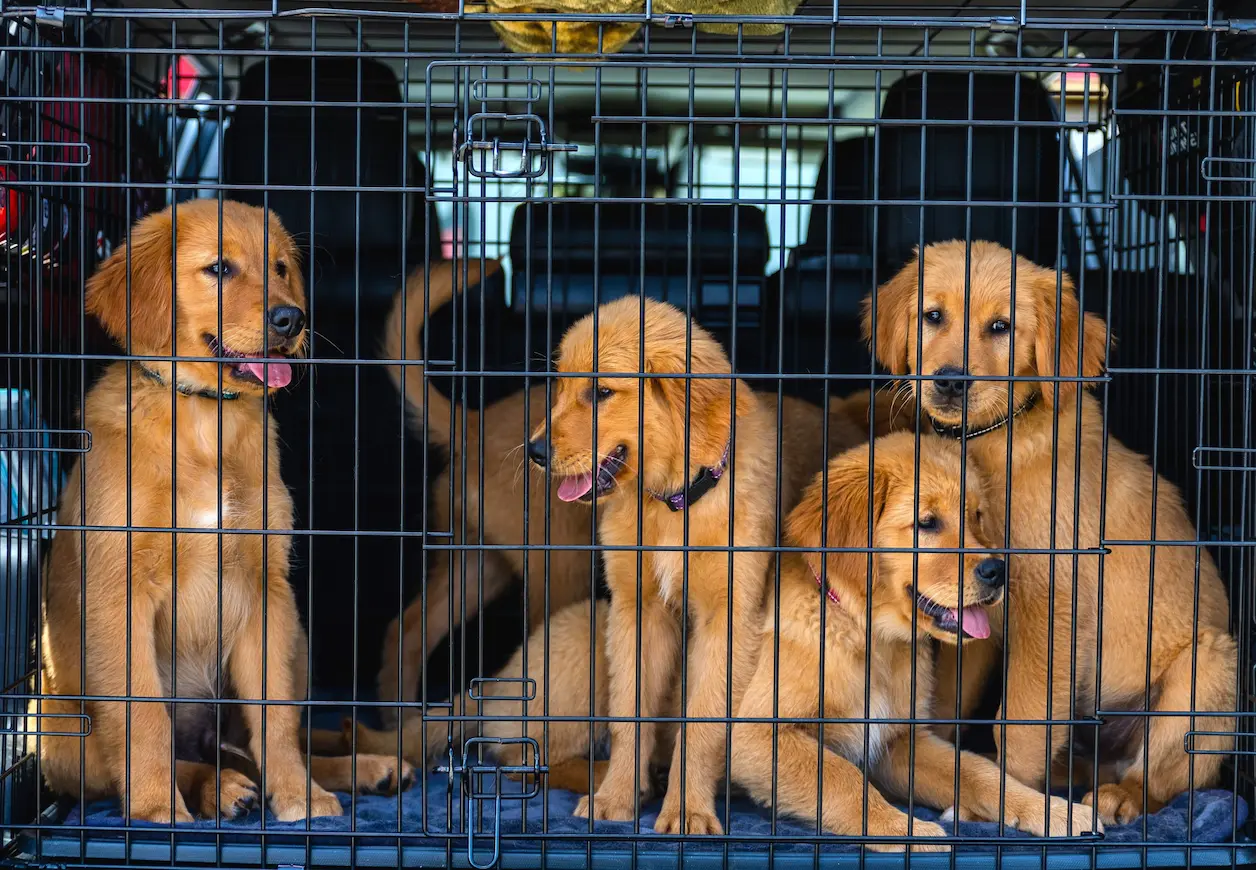
Wire crates designed for one dog cannot safely contain multiple animals. Dogs lack space to lie down safely, and the crate itself will collapse on impact rather than provide protection.
The Data Nobody's Gathering
There is currently no official UK data, from the police, the NHS, paramedics or the fire service, on how often pets are involved in road accidents.
That absence is itself part of the problem. The true scale of this is hidden because no one is measuring it.
The Wider Cost
It isn't only pets and their owners affected. Animal-related road incidents have caused thousands of human casualties in the UK in recent years, and animal rescues by fire services have risen sharply in the last decade.
Each one is paramedic time, fire-service time, hospital time, and a family changed.
Why Now
Society is changing. Pets are family. Pet ownership has grown significantly, and yet UK road casualties haven't fallen in over a decade, despite years of safety campaigns.
Protecting your pet in the car is part of being a responsible, loving owner, in the same way we now protect children. The evidence points the same way.
The Seatbelt Parallel
Car safety has been transformed in a single century. The earliest cars had no seatbelts at all. Then they were optional. Then nobody wore them.
It took a national awareness campaign, the famous mid-1970s seatbelt push, before public attitudes really shifted. Pet travel safety is the same shift waiting to happen.
Pet Travel Safety Day
Pet Travel Safety Day was created by Claire and is held every year on 1 July.
The date wasn't picked at random. It launched on 1 July 2021, marking the 30th anniversary of seatbelts becoming compulsory for everyone in a vehicle. This website is launching to coincide with Pet Travel Safety Day.

A Real Story
One of our customers was a passenger in a small car when it was hit from the side. Because the dog travelled unrestrained, it was thrown across the car and into her. She suffered 12 broken ribs and a punctured lung, requiring hospitalisation. The dog survived with a broken leg.
A restrained dog would have changed the outcome entirely. There are other real cases, some far worse, that we won't describe here. The point of telling you this is to inform, gently, not to frighten.

It's Not Just Dogs
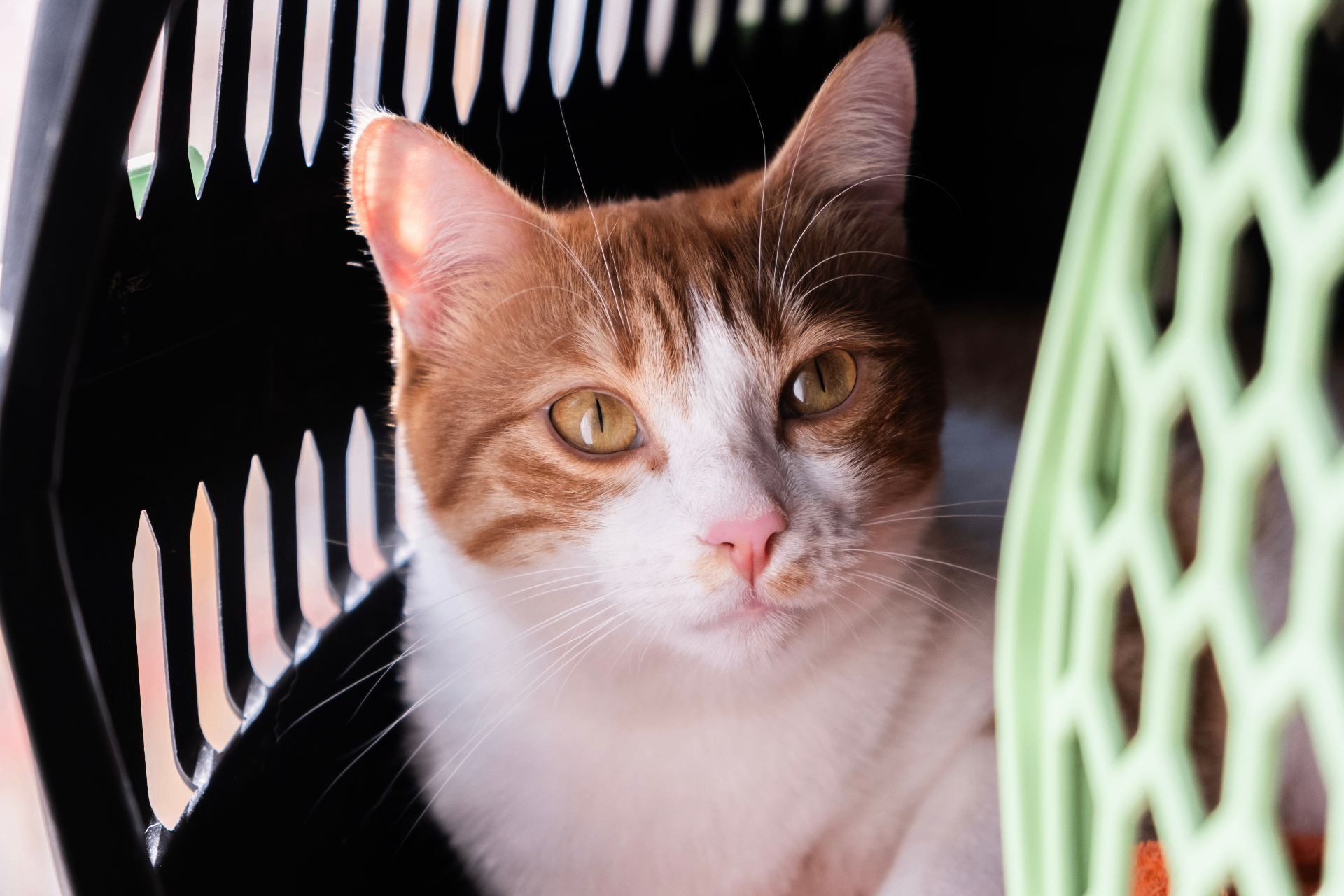
Our mission extends to cats too. A cat carrier is one of our early products because unsecured carriers placed on a seat, or carriers strapped in with a standard seatbelt, both fail catastrophically in a crash. Without a seatbelt, the entire carrier becomes a projectile. With a seatbelt alone, the carrier itself collapses under impact force, leaving your cat unprotected and at risk of serious injury.
Common Questions
Is a seatbelt-clip harness enough?
None of the seatbelt-clip harnesses on the market have been tested to a proper crash standard, so we don't recommend their use for safe pet travel. The clips have never been crash-tested, so there's no evidence they'll hold under impact. We're being clear about our testing because your pet's safety depends on it.
Why does crash-test speed matter?
A harness tested at 5mph and one tested at 30mph behave completely differently. Thirty miles per hour is the standard used for children's car seats, which is the benchmark we believe pets deserve too.
What about cats and carriers?
Loose carriers and carriers strapped in with a seatbelt can fail in a crash. A properly designed, crash-tested carrier is on our roadmap as one of the early products.
Help Us Change This
Join the journey, follow along, and help us bring pet travel safety into the mainstream where it belongs.
Join The Journey